CAMBERWELL HAND REHAB
  • Home
  • About Kate
  • ABOUT NADIA
  • Contact us
  • FREQUENTLY ASKED QUESTIONS
  • HAND THERAPY SERVICES AND FEES
  • BLOG

BLOG 

Archives

January 2026
December 2025
November 2025
October 2025
September 2025
August 2025
July 2025
April 2023
November 2022
September 2022
August 2022

Understanding Hypermobility and Its Impact on Hand Pain and Function

1/11/2025

12 Comments

 
Picture
Picture

​
As a hand therapist, I often see individuals experiencing persistent hand pain or functional issues without a clear cause. One common yet often overlooked contributor is hypermobility. Hypermobility refers to joints that move beyond the normal range of motion due to increased ligament laxity. While this may seem like a benefit in sports or dance, it can lead to significant issues—especially in the hands.
​
Hypermobility can be localized or part of a broader condition like Hypermobility Spectrum Disorders (HSD) or Hypermobile Ehlers-Danlos Syndrome (hEDS). These conditions are more common than many people realize and can be present in both children and adults. For hand function, hypermobility may lead to joint instability, frequent subluxations or dislocations, pain during repetitive or prolonged activities, and reduced grip strength. Tasks such as writing, typing, or even opening jars can become difficult or painful.


Picture

Diagnosing hypermobility

​Diagnosis involves clinical assessment using tools like the Beighton Score and a detailed history of joint symptoms. It’s important to rule out other causes of pain and understand whether hypermobility is contributing to the individual's presentation.
Picture

Managing injuries in hypermobile individuals

​When hypermobility is a factor, it changes how we manage injuries. Traditional approaches to hand injuries may not provide lasting relief if underlying joint instability is not addressed. Management must focus on joint protection, proprioceptive training, and muscle strengthening, rather than relying solely on rest or immobilization. In fact, over-reliance on splinting can sometimes worsen muscle deconditioning.

Strategies include tailored exercise programs to improve stability, education around activity modification, ergonomic support, and occasionally splinting during high-load activities. We also work closely with other professionals like rheumatologists or physiotherapists when systemic involvement is suspected.

If you or someone you know experiences frequent hand pain or "bendy" joints, it may be worth exploring whether hypermobility plays a role. Understanding this can lead to more effective, long-term solutions and help individuals regain confidence in their hand function.

As a sole trader hand therapist, I offer personalized care plans that consider each person’s unique joint profile—because effective rehabilitation starts with understanding the whole picture.

You can find a resource on Self-screening for hypermobility produced by Health connect here: https://hypermobility.smartersoft.io/hypermobility-test This is a great resource to help you start a conversation with your General Practitioner.
​
Picture
12 Comments

Understanding Trigger Finger and Trigger Thumb — Causes, Prevalence, and Treatment Options- A  HAND THERAPIST'S PERSPECTIVE

20/10/2025

13 Comments

 
​Trigger finger or trigger thumb can affect anyone, from office workers to athletes or tradesmen and even young children.
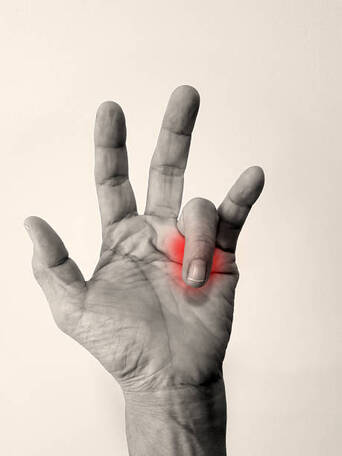
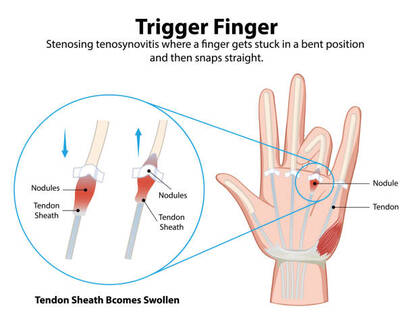
The condition occurs when the flexor tendon becomes irritated and inflamed, causing it to thicken or form a nodule. This restricts its ability to glide easily through the tendon sheath, leading to a painful “catching” or “locking” sensation most commonly when people make a full fist.
Picture

How common is trigger finger?

Picture
​Trigger finger is one of the most frequent causes of hand pain and dysfunction. It is more common in:
  • People aged 40–60
  • Women more than men
  • Individuals with diabetes or rheumatoid arthritis
  • Those performing repetitive gripping tasks
  • The thumb, ring, and middle fingers are most commonly affected.

What does a trigger finger feel like?

Picture
  • ​

A painful clicking or locking sensation when bending or straightening the finger or thumb

  • Tenderness at the base of the finger or thumb

  • Stiffness, especially in the morning

  • A catching/ snapping or locking feeling when moving the digit.

  • In more advanced cases, the finger or thumb may become stuck in a bent position

What can a hand therapist do to help for trigger finger?
Picture
​At Camberwell Hand Rehab, we guide clients through both the conservative and medical treatment pathways:
​
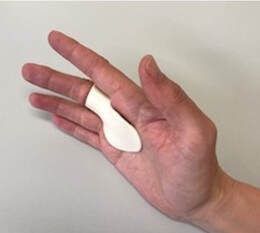
  • Splinting is often the first step in management. A custom-made splint reduces some of the movement in  the affected finger or thumb, this reduces the irritation by allowing the tendon to rest and heal. Splints can significantly reduce pain and improve movement, especially when worn at night.​​


​
  • Activity modification: We help identify and reduce repetitive gripping or forceful use.
  • Soft tissue therapy: Gentle massage and stretching techniques to relieve tendon irritation.
  • Therapeutic exercises: To improve tendon gliding and reduce stiffness.
  • Anti-inflammatories medications
  • Many cases improve significantly with hand therapy alone.

What are the medical treatment options for trigger finger?
Picture
​💉 Corticosteroid Injections
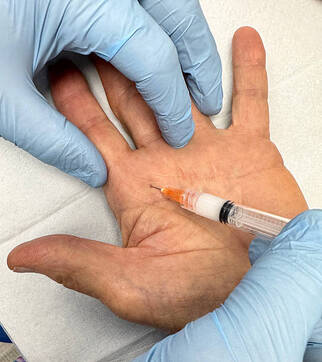
If symptoms persist, corticosteroid injections into the sheath of the tendon can help reduce inflammation and restore smooth tendon movement. These are used if conservative care is not sufficient or symptoms are severe.
🛠️ Surgery
When conservative measures are not successful, surgery may be recommended. This minor procedure releases the tight part of the tendon sheath, allowing the tendon to glide freely again. This can usually be done under local anaesthetic and has a high success rate.

Don’t ignore that click or catch in your finger.  With early assessment and intervention from a qualified hand therapist, most people experience excellent outcomes and a quick return to normal hand function.
If you’re noticing clicking, pain, or stiffness in your fingers or thumb, a hand therapy assessment can help you find the right treatment pathway early.
​
Click this link to the Australian Hand Therapy Association's downloadable information sheet on trigger finger: ​

Your browser does not support viewing this document. Click here to download the document.
13 Comments

    Author

    Kate Crump- Physio,
    Accredited Hand Therapist, as awarded by the AHTA


    Archives

    January 2026
    December 2025
    November 2025
    October 2025
    September 2025
    August 2025
    July 2025
    April 2023
    November 2022
    September 2022
    August 2022

    Categories

    All

    RSS Feed

  • Home
  • About Kate
  • ABOUT NADIA
  • Contact us
  • FREQUENTLY ASKED QUESTIONS
  • HAND THERAPY SERVICES AND FEES
  • BLOG